When people talk about facial ageing, attention usually goes straight to fine lines around the eyes or forehead movement. These areas are familiar, widely discussed and often associated with injectable treatments. The lower face, however, tends to receive far less explanation, despite being one of the most visually impactful areas as we age.
Changes around the jawline are often described vaguely. People notice softness, heaviness or a loss of definition, but struggle to pinpoint why it is happening. This lack of clarity has led to confusion about which treatments are suitable and what realistic outcomes look like.
Understanding how the lower face changes is the first step towards making informed aesthetic choices.
What Actually Causes Changes Around the Jawline
Ageing in the lower face is influenced by several factors working together. Skin elasticity gradually reduces, meaning it does not snap back as easily as it once did. Fat pads shift position over time, altering facial contours. Muscle activity also plays a role, particularly in how the jaw and neck interact.
Gravity contributes, but it is not the sole cause. Repetitive movement, genetics and lifestyle all affect how the lower face develops with age. This is why two people of the same age can experiencevery different changes.
Importantly, these shifts are structural rather than surface-level. This is why topical skincare alone rarely creates visible improvement in this area.
Why One Size Solutions Do Not Work
A common misconception is that one treatment can fix all concerns around the jawline. In reality, different issues require different approaches. Volume loss, skin laxity and muscle pull are separate elements that may need to be addressed individually or in combination.
Treatments that work well in the upper face may not be appropriate for the lower face. The anatomy is different, the movement patterns are different and the risk of unnatural results is higher when techniques are applied incorrectly.
This is why careful assessment matters far more than following trends or online advice.
The Role of Muscle Activity
Muscle behaviour in the lower face is often overlooked. Certain muscles pull downwards, contributing to heaviness or loss of definition along the jawline. When these muscles become dominant, they can overpower others that support lift and balance.
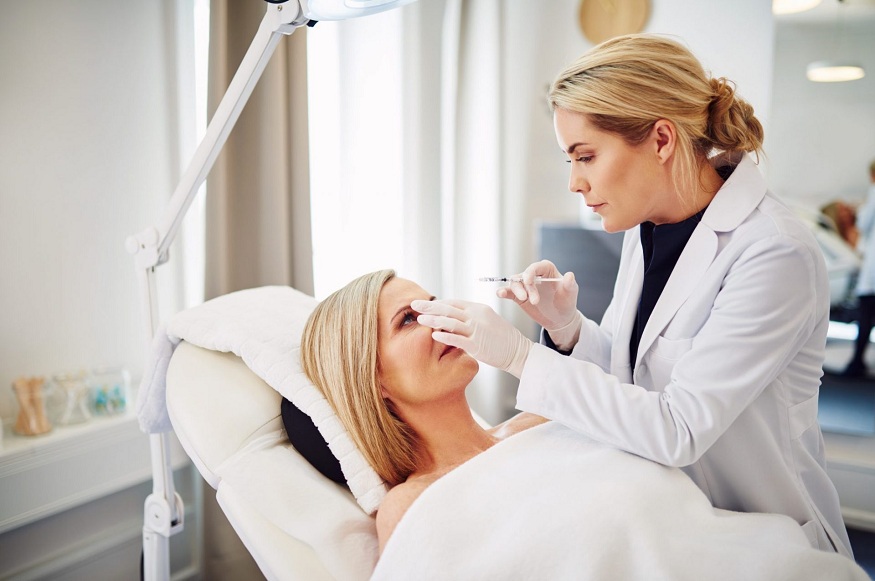
In some cases, practitioners may consider options such as botox for jowls to gently influence muscle activity rather than adding volume. This approach focuses on balance rather than filling, which is why it can be effective when used appropriately.
However, this type of treatment requires precision and a clear understanding of facial anatomy. Incorrect placement can affect expression or movement, which reinforces the importance of practitioner expertise.
Why Education Matters More Than Ever
The rise of social media has made aesthetic treatments more visible, but not always more understandable. Short videos and before-and-after images rarely explain what was done or why it worked for that particular person.
Without context, people may assume results are easily replicated or suitable for everyone. This can lead to unrealistic expectations or inappropriate treatment choices.
Education empowers people to ask better questions. It shifts the focus from chasing outcomes to understanding processes. This is particularly important when considering treatments in sensitive areas such as the lower face.
Choosing the Right Clinical Environment
The environment in which treatment takes place plays a significant role in outcomes. A reputable botox clinic should prioritise consultation, assessment and explanation over speed or volume.
Clients should feel informed rather than persuaded. They should understand what a treatment can realistically achieve and what it cannot. Time spent discussing options is not an inconvenience. It is an essential part of safe aesthetic care.
Clinics that encourage informed decision making tend to deliver more consistent and natural results.
Why Practitioner Approach Shapes Results
Lower face treatments are technically demanding. Small variations in technique can produce very different outcomes. This is why experience matters more here than in almost any other area of the face.
Practitioners such as Dr Hennessy are known for taking a measured, anatomy-led approach rather than relying on formulaic techniques. This method focuses on balance, facial movement and long-term outcomes rather than short-term visual impact.
A thoughtful approach reduces the risk of overtreatment and supports results that integrate naturally with the rest of the face.
Subtlety Over Transformation
One of the biggest shifts in aesthetics has been a move away from dramatic change. More people now seek treatments that are not immediately obvious to others.
In the lower face, subtlety is particularly important. Overcorrection can make features appear heavy or restricted. Well-planned treatment should support natural expression and facial harmony rather than altering identity.
This is why restraint is often a sign of skill rather than limitation.
Understanding What Not to Do
Just as important as knowing which treatments may help is understanding which ones are unsuitable. Not every concern can or should be treated with injectables. In some cases, doing nothing is the best option.
Ethical practitioners are comfortable saying no. They prioritise long-term facial health over short-term results. This protects both the client and the integrity of the outcome.
Knowing when not to intervene is a critical part of professional aesthetic care.
Making Informed Choices
Aesthetic treatments should never feel rushed. Taking time to learn about facial ageing, treatment mechanisms and practitioner approach leads to better experiences and outcomes.
The lower face deserves the same level of understanding as any other area. When people are informed, expectations align more closely with reality, and satisfaction tends to be higher.
Good results are rarely accidental. They are the product of education, assessment and careful execution.